Treści na naszej stronie internetowej są udostępniane wyłącznie w ogólnych celach informacyjnych. Nie należy ich rozpatrywać, ani nie mają na celu udzielania porad lub zaleceń dotyczących zakupu, sprzedaży lub handlu jakimikolwiek produktami lub usługami. Co ważne, przedstawione informacje nie stanowią oferty sprzedaży ani zaproszenia do złożenia oferty kupna jakiegokolwiek produktu.

Należy pamiętać, że dostępność naszych produktów może się różnić na różnych rynkach ze względu na ograniczenia regulacyjne lub inne względy. W związku z tym nie wszystkie produkty lub usługi mogą być dostępne w Twoim regionie lub kraju. W przypadku szczegółowych pytań dotyczących dostępności i cen dowolnego produktu prosimy o kontakt pod adresem sales@noctiluca.eu.

Opis związku

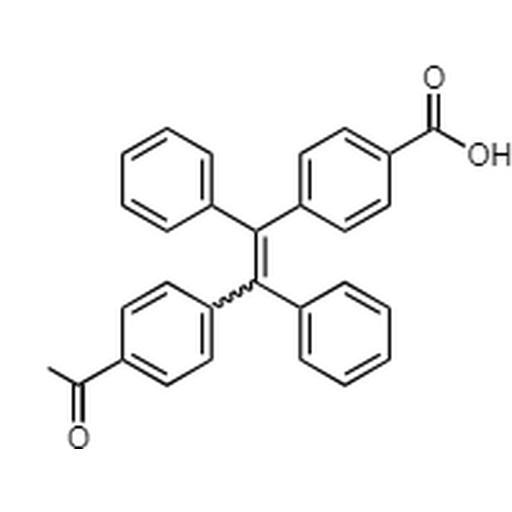
TPE-CA: Ein Eckpfeiler in der chiralen Katalyse und photoresponsiven Technologien

Im dynamischen Bereich der organischen Chemie erweist sich TPE-CA aufgrund seiner Doppelfunktion in der asymmetrischen Katalyse und als lichtempfindliches Material als eine Verbindung von großem Interesse. Seine einzigartige Molekülstruktur und seine hohe Enantioselektivität machen es zu einem wertvollen Aktivposten bei der Synthese chiraler Moleküle und der Entwicklung fortschrittlicher optoelektronischer Bauelemente.

Entschlüsselung der molekularen Komplexität von TPE-CA

TPE-CA, mit vollem Namen 4,4′-(1,2-Diphenylethen-1,2-diyl)dibenzoesäure, ist ein Dicarbonsäurederivat. Diese molekulare Anordnung ist nicht nur wegen ihrer chiralen Ligandenfähigkeiten faszinierend, sondern auch wegen ihrer photoresponsiven Eigenschaften, die für eine Vielzahl chemischer Prozesse von entscheidender Bedeutung sind.

Hauptmerkmale von TPE-CA

  • Chiraler Ligand für die asymmetrische Katalyse: TPE-CA nutzt seine chirale Struktur und wird in asymmetrischen katalytischen Reaktionen wie Hydrierung und Epoxidierung eingesetzt, um eine hohe Enantioselektivität bei der Synthese chiraler Verbindungen zu erreichen.
  • Photoresponsives Material: Die Fähigkeit von TPE-CA, sich bei Einwirkung von UV- und sichtbarem Licht einer reversiblen Photoisomerisierung zu unterziehen, öffnet die Türen für seine Anwendung in optischen Speichern und molekularen Schaltern.
  • Aggregationsinduziertes Emissionsphänomen (AIE): Die AIE-Eigenschaft von TPE-CA macht es zu einem vielversprechenden Kandidaten für die Entwicklung von fluoreszierenden Chemosensoren und anderen optoelektronischen Materialien.

Die Vielseitigkeit von TPE-CA in der Materialwissenschaft

Die Anwendungen von TPE-CA erstrecken sich auf das Design von MOFs und COFs, wo seine strukturelle Stabilität und seine reaktiven Stellen für den Bau von Gerüsten mit potenziellen Anwendungen in Gasspeicher-, Separationstechnologien und Arzneimittelverabreichungssystemen unerlässlich sind.

Schlussfolgerung

TPE-CA steht an der Schnittstelle von Innovationen sowohl im Bereich der asymmetrischen Katalyse als auch der Optoelektronik. Seine Synthese und Anwendungen spiegeln die anhaltende Suche nach Materialien wider, die nicht nur die Grenzen der aktuellen Technologie erweitern, sondern auch neue Wege für wissenschaftliche Entdeckungen und industrielle Anwendungen bieten. Mit dem Fortschritt der Forschung wächst die Rolle von TPE-CA bei der Weiterentwicklung der Materialwissenschaft weiter und verspricht spannende Entwicklungen für die Zukunft.
Bibliografia

Polecane związki

Treści na naszej stronie internetowej są udostępniane wyłącznie w ogólnych celach informacyjnych. Nie należy ich rozpatrywać, ani nie mają na celu udzielania porad lub zaleceń dotyczących zakupu, sprzedaży lub handlu jakimikolwiek produktami lub usługami. Co ważne, przedstawione informacje nie stanowią oferty sprzedaży ani zaproszenia do złożenia oferty kupna jakiegokolwiek produktu.

Należy pamiętać, że dostępność naszych produktów może się różnić na różnych rynkach ze względu na ograniczenia regulacyjne lub inne względy. W związku z tym nie wszystkie produkty lub usługi mogą być dostępne w Twoim regionie lub kraju. W przypadku szczegółowych pytań dotyczących dostępności i cen dowolnego produktu prosimy o kontakt pod adresem sales@noctiluca.eu.

Opis związku

TPE-CA: A Cornerstone in Chiral Catalysis and Photoresponsive Technologies

In the dynamic realm of organic chemistry, TPE-CA emerges as a compound of significant interest due to its dual functionality in asymmetric catalysis and as a photoresponsive material. Its unique molecular structure and high enantioselectivity position it as a valuable asset in the synthesis of chiral molecules and the development of advanced optoelectronic devices.

Deciphering the Molecular Complexity of TPE-CA

TPE-CA, with its full name 4,4′-(1,2-Diphenylethene-1,2-diyl)dibenzoic acid, is a dicarboxylic acid derivative. This molecular arrangement is not only intriguing for its chiral ligand capabilities but also for its photoresponsive properties, which are critical in a variety of chemical processes.

Key Features of TPE-CA

  • Chiral Ligand for Asymmetric Catalysis: Leveraging its chiral structure, TPE-CA has been utilized in asymmetric catalytic reactions, such as hydrogenation and epoxidation, to achieve high enantioselectivity in the synthesis of chiral compounds.
  • Photoresponsive Material: TPE-CA’s ability to undergo reversible photoisomerization upon exposure to UV and visible light opens doors to its application in optical storage and molecular switches.
  • Aggregation-Induced Emission (AIE) Phenomenon: The AIE characteristic of TPE-CA makes it a promising candidate for the development of fluorescent chemosensors and other optoelectronic materials.

The Versatility of TPE-CA in Material Science

TPE-CA’s applications extend into the design of MOFs and COFs, where its structural stability and reactive sites are essential for constructing frameworks with potential uses in gas storage, separation technologies, and drug delivery systems.

Konkluzja

TPE-CA stands at the crossroads of innovation in both the field of asymmetric catalysis and optoelectronics. Its synthesis and applications reflect the ongoing quest for materials that not only push the boundaries of current technology but also offer new pathways for scientific discovery and industrial application. As research progresses, the role of TPE-CA in advancing material science continues to grow, promising exciting developments for the future.

Bibliografia

Polecane związki

Want to send a message? Fill out the form