TPE-TOH: A Luminescent Pioneer in Organic Optoelectronic Materials
The field of organic optoelectronic materials is continuously advancing, with compounds like TPE-TOH emerging as significant contributors. With its distinctive aggregation-induced emission (AIE) effect and its role as a synthetic intermediate for more complex derivatives, TPE-TOH is solidifying its position in the domain.
Understanding TPE-TOH
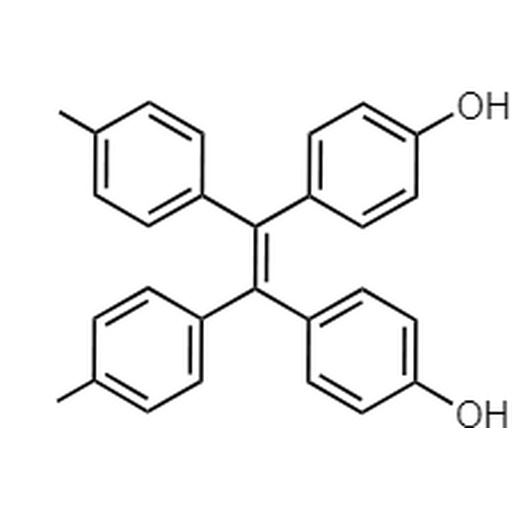
4,4′,4′′,4′′′-(Ethene-1,1,2,2-tetrayl)tetraphenol, commonly known as TPE-TOH, is a derivative of tetraphenylethylene (TPE) enriched with four hydroxyl groups. In a THF solution, this molecule remains predominantly non-emissive. However, the addition of water initiates an intense blue fluorescence, attributed to the aggregation-induced emission (AIE) effect.
Key Features of TPE-TOH
- Luminescent Behavior: The AIE effect exhibited by TPE-TOH positions it as a preferred choice for optical materials and chemosensors. Its characteristic fluorescence upon aggregation is a defining trait.
- Role as a Synthetic Intermediate: TPE-TOH acts as a foundational compound for synthesizing intricate derivatives like TPE-CA and TPE-Sulfonate, broadening its relevance in organic electronics.
- Diverse Applications: Beyond its luminescent properties, TPE-TOH’s molecular composition allows for its deployment in a range of applications, from fluorescent chemosensors to aggregation-induced emission layer materials.
TPE-TOH in Organic Electronics
The π-electron structure of TPE-TOH, combined with its electron-deficient nature, earmarks it as a crucial material in organic electronics. Its versatility and adaptability to various applications emphasize its importance in the sector. Moreover, its function as a synthetic intermediate for more complex derivatives accentuates its value in the research and development of next-generation organic electronic devices.
Konkluzja
TPE-TOH stands as a pivotal compound in the organic optoelectronic materials sector. Its unique molecular features, coupled with its diverse applications, position it as a material with substantial potential. As the organic electronics field progresses, the role of TPE-TOH will undoubtedly be of significant importance.