PdOEP: The Catalyst and Optical Powerhouse in Organic Electronics
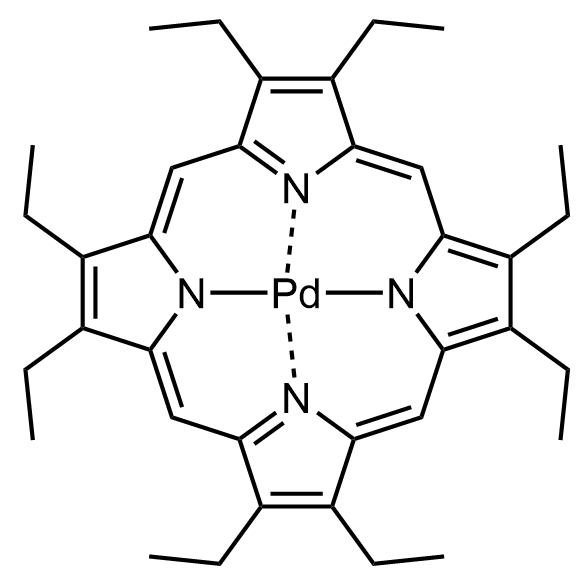
The realm of organic electronics is witnessing a paradigm shift with the introduction of compounds like PdOEP, which have revolutionized the industry with their dual role as catalysts and optical enhancers. PdOEP, or 2,3,7,8,12,13,17,18-Octaethyl-21H,23H-porphine palladium(II), is a palladium porphyrin complex known for its exceptional purity and multifaceted applications in organic electronics.
Understanding PdOEP
PdOEP stands out in the world of organometallics due to its rich optical properties and its role as a catalyst. This complex is a prime example of a metal porphyrin complex, which is pivotal in systems utilizing triplet−triplet annihilation upconversion (TTA-UC). TTA-UC is a process where photons of lower energy are converted to higher energy states, a mechanism that is increasingly important in the development of advanced organic electronic devices.
Key Features of PdOEP
The PdOEP complex is renowned for its high proportion of triplet states, making it an ideal sensitizer for TTA-UC systems. Its ability to form complexes with various metal ions enhances its versatility and application scope. Here are some of its key features:
- Catalytic Efficiency: PdOEP acts as a robust catalyst, facilitating various chemical reactions with high efficiency.
- Optical Superiority: With rich optical properties, PdOEP is crucial in systems that require high-intensity emission and absorption.
- Triplet State Prowess: The high proportion of triplet states in PdOEP makes it a typical sensitizer for TTA-UC systems, essential for advanced solar cell technology.
The Role of PdOEP in TTA-UC Systems
PdOEP’s significance in TTA-UC systems cannot be overstated. It plays a key role in enhancing the efficiency of solar cells and is widely used in sensing and circularly polarized luminescence applications. The complex’s ability to act as a sensitizer in TTA-UC systems underscores its importance in the field of organic electronics, particularly in the pursuit of more sustainable and efficient energy solutions.
Konkluzja
PdOEP is a testament to the innovative progress in the field of organic electronics. Its multifunctional role as a catalyst and in optical applications makes it a vital component in the advancement of OLED technology and TTA-UC systems. With its high purity and performance, PdOEP is setting a new standard for materials in the industry, paving the way for more efficient and sustainable electronic devices.